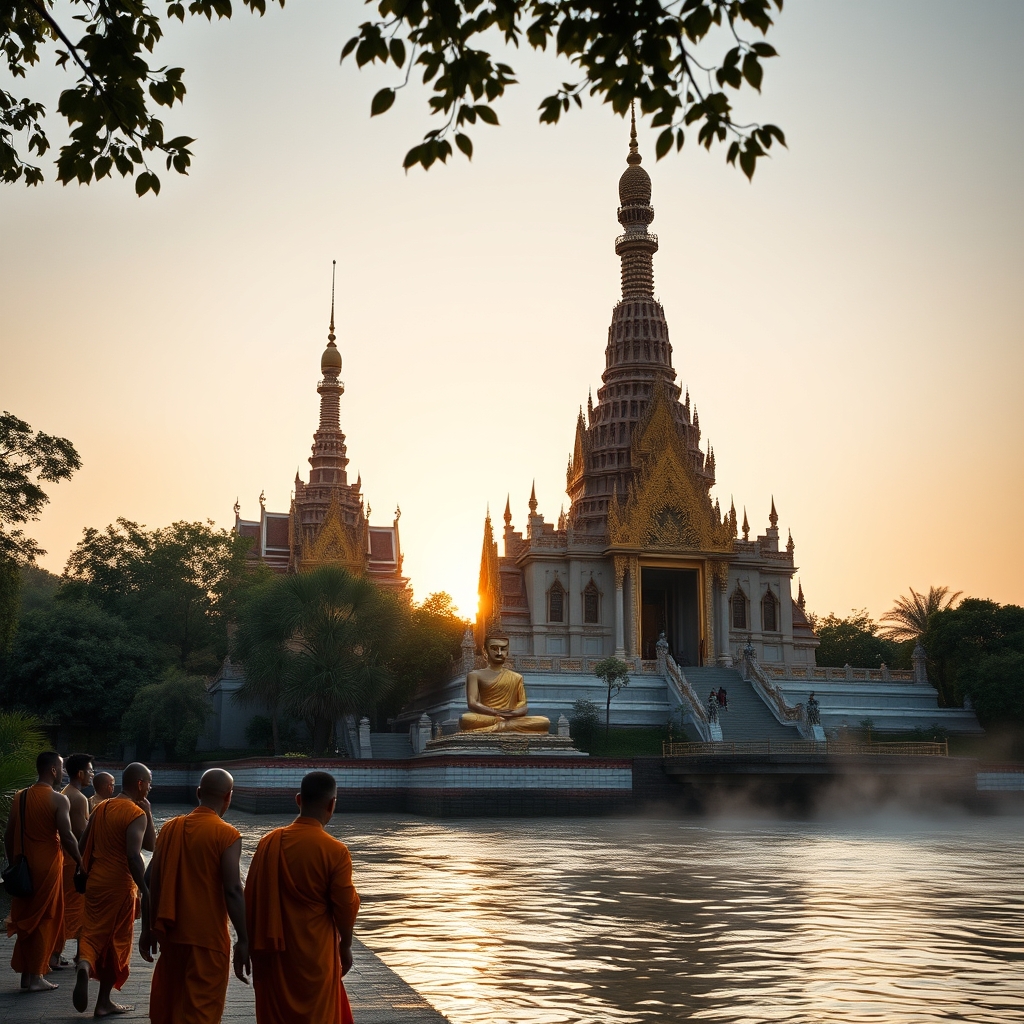
Historical Origins and Architectural Features
Wat Man Khun is first mentioned in the Ayutthaya chronicles, dating to around 1550 CE. It was commissioned by King Maha Chakkraphat to house a locally revered early reclining Buddha.
The name “Man Khun” derives from the Sanskrit “Mahānanda,” meaning “great joy.” During the Ayutthaya era the temple was a royal monastery with tax‑exempt status and a monastic school that produced many eminent monks.
In the late 19th century, flood damage prompted King Rama V to launch a major restoration in 1883, adding a new prang, a gilded ubosot, and commissioning renowned artists to paint Jataka‑story murals.
- The main prang combines teak and bronze, overlaid with gold leaf, symbolizing illumination and compassion.
- The reclining Buddha is an early Thai stone sculpture, 1.8 m tall, dignified in posture, and registered as a national heritage object.
Cultural Belief and Lineage of Masters
In the early 20th century the temple became the meditation center of Forest Tradition master Phra Ajarn Phra Suriya. He emphasized the dual practice of samatha and vipassanā, sending disciples throughout northern Thailand and establishing the distinctive Wat Man Khun meditation method.
Lay devotees traditionally offer golden oil lamps and recite the Diamond Sutra to seek health and prosperity; a grand ceremony is held each November (Thai lunar calendar) during the “Festival of Lights.”
- During the Festival of Lights, monks light a thousand lamps, symbolizing the Buddha’s illumination of all beings.
- The temple houses a manuscript copy of the Āgama Sūtras, an important source for early Pāli studies.
Section Heading 2: Etiquette and Taboos
When wearing amulets or talismans produced by Wat Man Khun, observe the following ritual: rinse briefly in clean water, then offer a samat (palms together) salute to the principal Buddha of the temple before putting them on.
- Remove the amulet before sexual activity or bathing to prevent impurity from affecting its merit.
- Do not place the amulet below waist level; it should be worn near the chest or neck.
- Avoid placing the amulet on the floor of kitchens or toilets.