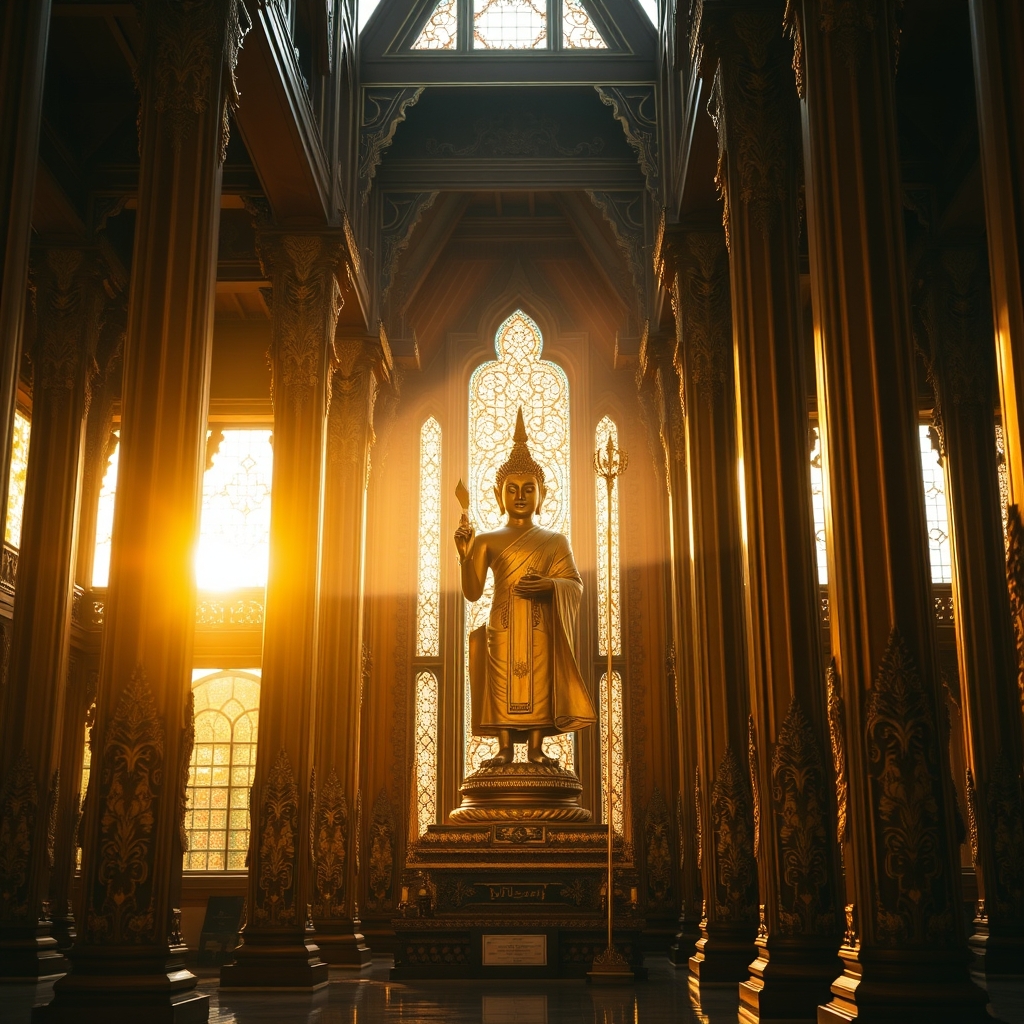
Historical Origins and Iconographic Symbolism
Vajrapāṇi (Sanskrit Vajrapāṇi) first appears in Mahayana sutras such as the Diamond Sutra and the Vajra‑like Speech Sutra as an emanation of the Buddha, holding the vajra staff to symbolize an indestructible bodhicitta and the power of the Dharma. He was later incorporated into Tantric Buddhism as the “Secret Master” who inaugurates the Vajra transmission.
After entering Tibet, Vajrapāṇi became one of the Four Great Protectors and is extensively described in the Tibetan text “Vajrapāṇi Secret Master.” During the Ayutthaya and early Rattanakosin periods, his image spread to Thailand, appearing in notable temples such as Phra Phutthabat (Ayutthaya), Wat Phra Kaew in Bangkok, and Wat Suan Dok in Chiang Mai, serving as a guardian of principal Buddha images.
- Right hand holds a vajra, symbolizing the indestructible bodhicitta
- In Vajrayana, he marks the beginning and transmission of the vajra teachings
- Thai temples often place Vajrapāṇi statues to guard the main Buddha image
Etiquette and Taboos for Wearing
As a protective amulet, Vajrapāṇi should be worn with reverence. Lightly rinse the surface with clean water each morning and evening, avoiding alcohol or scented cleaners that can tarnish the metal. When offered, place the amulet on a tray above chest level, facing the Buddha image or the devotee, never upside‑down.
Taboos include: removing the amulet before bathing, sexual activity, or sleep; never touching another person’s head or feet with the amulet; if the amulet becomes damaged, it should be taken to an authorized master for repair or re-consecration, never welded or altered by oneself.
- Remove before intimacy or bathing
- Do not place below waist level
- When offering, keep the front side up and facing the principal Buddha