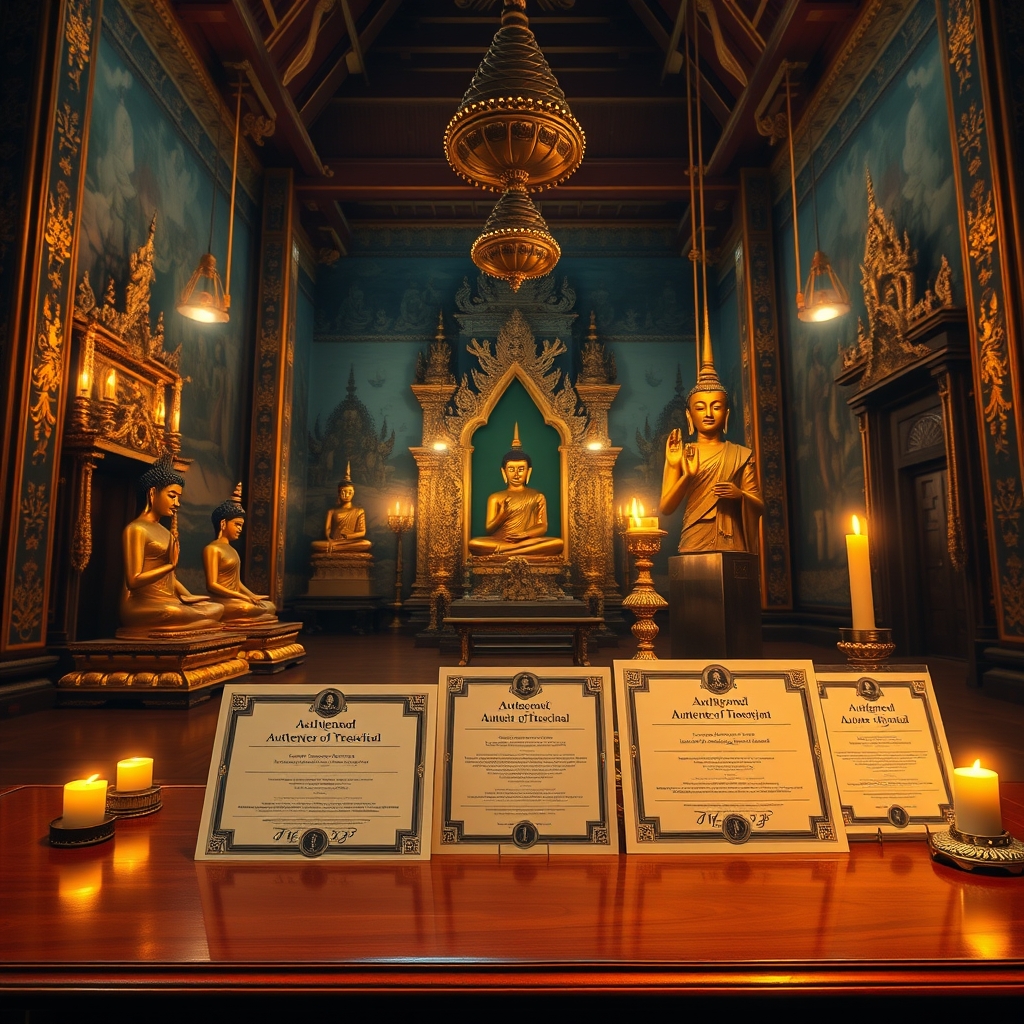
1. Historical Origins and Overview of Authentication Authorities
The authentication system for Thai amulets originated in the 1970s when the market expanded rapidly and counterfeit items proliferated. To protect devotees and enhance collectible value, the Thai Amulet Collectors Association (สมาคมพระเครื่อง, Samakom Phra) was officially established in 1979, becoming the first domestic body centered on scholarly appraisal.
Subsequently, with the rise of online marketplaces, institutions such as G‑Pra (U‑Amulet) and Thaprachan (TPC) were founded, offering digital certificates, rapid lookup, and cross‑border verification services, establishing today’s three widely recognized authorities.
- Samakom Phra: Highest standards, physical certificates, unique numbers searchable on the official site
- G‑Pra (U‑Amulet): Integrated online platform, suited for mid‑to‑high‑end amulets
- Thaprachan (TPC): Commercial fast‑track issuance, fee ~HKD300, turnaround 1‑3 months
2. Comprehensive Verification Procedures for the Three Major Authorities
During verification, cross‑check the physical item against the certificate item by item: 1) Master/temple of origin; 2) Year and material; 3) Certificate number against the official database; 4) Photographic details (e.g., patterns, gold‑leaf layers, inscriptions). Any discrepancy should be reported to the platform’s support to avoid blind purchases.
- Step 1: Enter the certificate number at samakompra.com/searchmycer/ to verify authenticity
- Step 2: Match the master and temple listed on the certificate with the markings on the amulet
- Step 3: Examine material and craftsmanship (e.g., gold‑leaf thickness, silver‑wire patterns) for period‑specific traits
- Step 4: Perform a secondary verification via the official app or website and save the screenshot as proof
3. Etiquette and Taboos for Daily Wear
Although an amulet is a protective talisman, traditional etiquette must be observed to preserve its merit. Before wearing, bathe and cleanse hands, then bow with palms together toward a Buddha statue or the master’s image. Daily offerings should consist of clean water, fresh flowers, and incense; avoid contact with alcohol or unclean substances.
- Remove before sexual activity or bathing to prevent loss of merit
- Do not place below waist level; keep it near the chest or behind the neck
- Do not give away casually or place in unclean areas such as toilets or kitchens
- Perform a cleaning ritual on the 1st and 15th of each lunar month using a soft cloth to gently wipe the surface