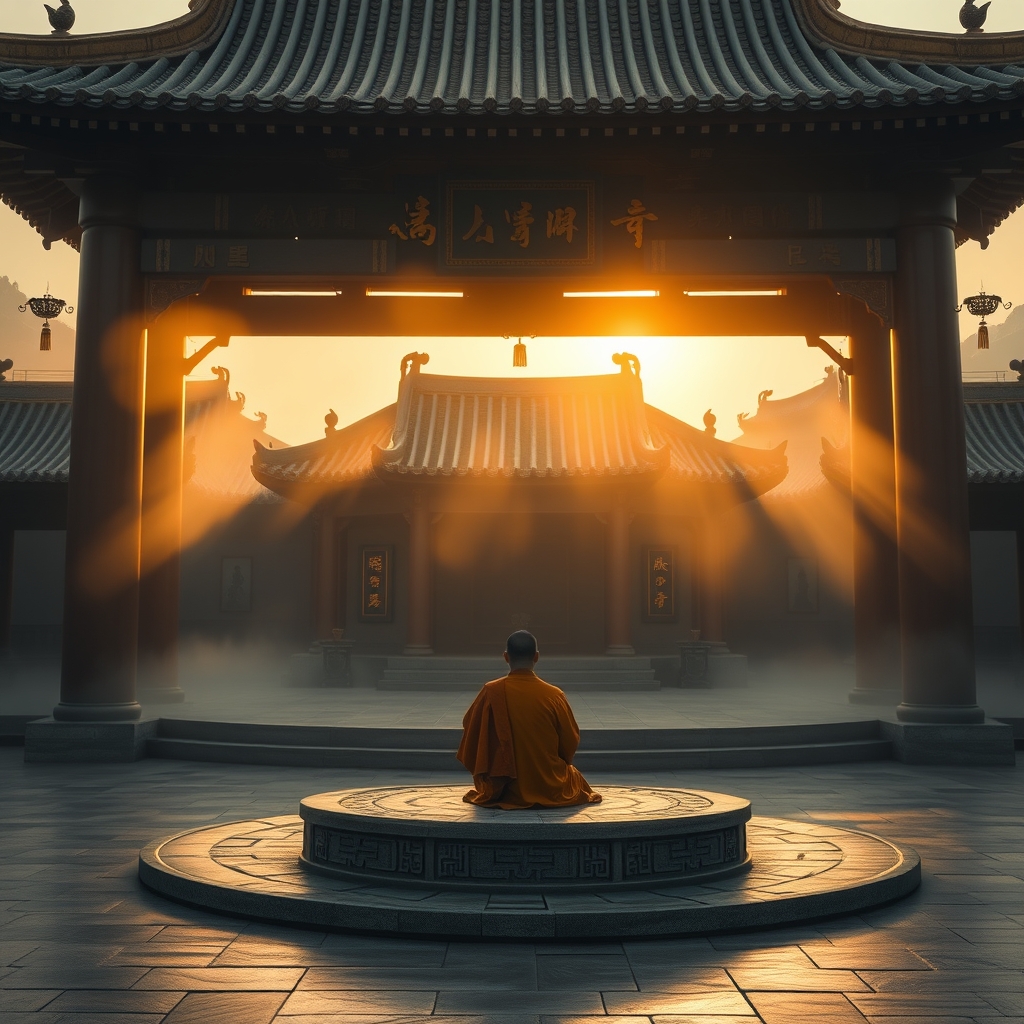
Cultural Reflection Sparked by the Hot Search
Recently the remark “no one leaves the Temple of Earth empty‑handed” went viral, and visitors report that beyond the scenery they acquire a subtle shift in mindset within this Ming‑era sacrificial altar.
The Temple’s central axis, three concentric walls, and quadrilateral tablet corridors echo the spatial order of Zen “shikantaza” practice, while the South‑Asian Buddhist statue motifs on its plaques embed Buddhist aesthetics directly into a Confucian‑ritual space.
- The symmetrical axis creates a physical stillness that mirrors Zen meditation.
- Rounded lines of South‑Asian Buddhist icons symbolize emptiness and compassion.
- Leaving “empty‑handed” often signifies that the visitor has taken away a seed of self‑observation.
Etiquette and Taboos
When wearing an amulet inspired by the Temple of Earth, observe traditional etiquette: cleanse the piece in clear water, recite the Diamond Sutra three times to purify intention, and avoid placing the amulet at the foot of the bed at night to preserve harmonious qi.
- Remove before intimacy or bathing
- Do not place below waist level
- Do not store the amulet with impure items
Zen Connections Between the Ancient Altar Architecture and Buddhist Statues
The Temple’s “round heaven, square earth” concept mirrors the Diamond Sutra’s “form is emptiness, emptiness is form”; the circular altar symbolizes the cosmic body, while the four surrounding tablets resemble the four meditative absorptions, guiding practitioners step by step.
Ming artisans frequently engraved verses of Master Hui Neng at the base of tablets, illustrating the fusion of Zen teaching with imperial rites—providing rare evidence of South‑Asian Buddhist iconography within a northern court context.
- The circular altar corresponds to the “complete” state of practice.
- Hui Neng’s verses on the tablets remind one to constantly return to one’s original mind.