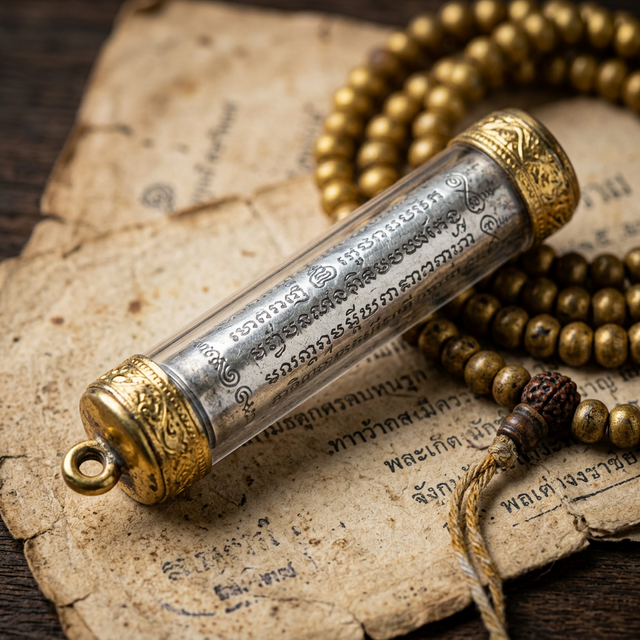
What is a Takrut?
The "Takrut" is one of the purest and most primal forms of Thai amulets. Eschewing complex molds, it consists of secret scripts (Katha) hand-engraved by a monk onto a sheet of metal (gold, silver, copper, or leklai) or animal skin (like tiger fur). The sheet is then rolled into a tube and consecrated through extensive chanting.
Its core power lies in the synthesis of mental intent, sacred letters, and metallic energy.
Origins: The Battle-Ready Talisman
In ancient times, when soldiers could not carry heavy Buddha statues into the field, monks would etch protective spells onto thin metal strips. These were rolled up and worn around the waist or neck. This pursuit of "utility" and "mobility" created the Takrut tradition.
Common Types of Takrut
- Bullet Takrut (Look Puen): Symbolizing "invulnerability to projectiles," representing extreme physical protection.
- Triple Metal (Sam Kasat): Composed of gold, silver, and copper sheets representing wealth, kindness, and personal safety respectively.
- Healing Takrut: Focused on health and mental tranquility.
- Tiger Fur Takrut: Focused on authority, self-command, and dominance.
The Secret Core: The Power of Script
The content of a Takrut is hidden within its roll, known only to the Master who created it. This "secrecy" is believed to enhance its mystical potency. A monk must maintain total focus while engraving, ensuring every stroke of the stylus is accompanied by a silent prayer.
How to Wear and Devote
- Versatility: Takrut can be worn around the neck, the waist, or even kept in a pocket (depending on specific temple rules).
- Fewer Taboos: Compared to Buddha-image amulets, Takrut usually comes with fewer restrictive rules, making them ideal for high-intensity work environments and modern daily life.
Conclusion
A Takrut is a bridge connecting ancient wisdom with modern life. It is simple, direct, and pure. To wear one is to carry the handwritten blessings of a Master and the linguistic power of a thousand-year-old tradition. It is the aesthetics of minimalist faith.