I. Botanical Roots and Monastic Offering History
Timeline of Sea Buckthorn in Tibetan Monastic Offerings
Native to the Plateau
Sea buckthorn naturally spreads on the arid slopes of the Qinghai‑Tibet Plateau, thriving in cold and dry conditions.
Early Monastic Offering
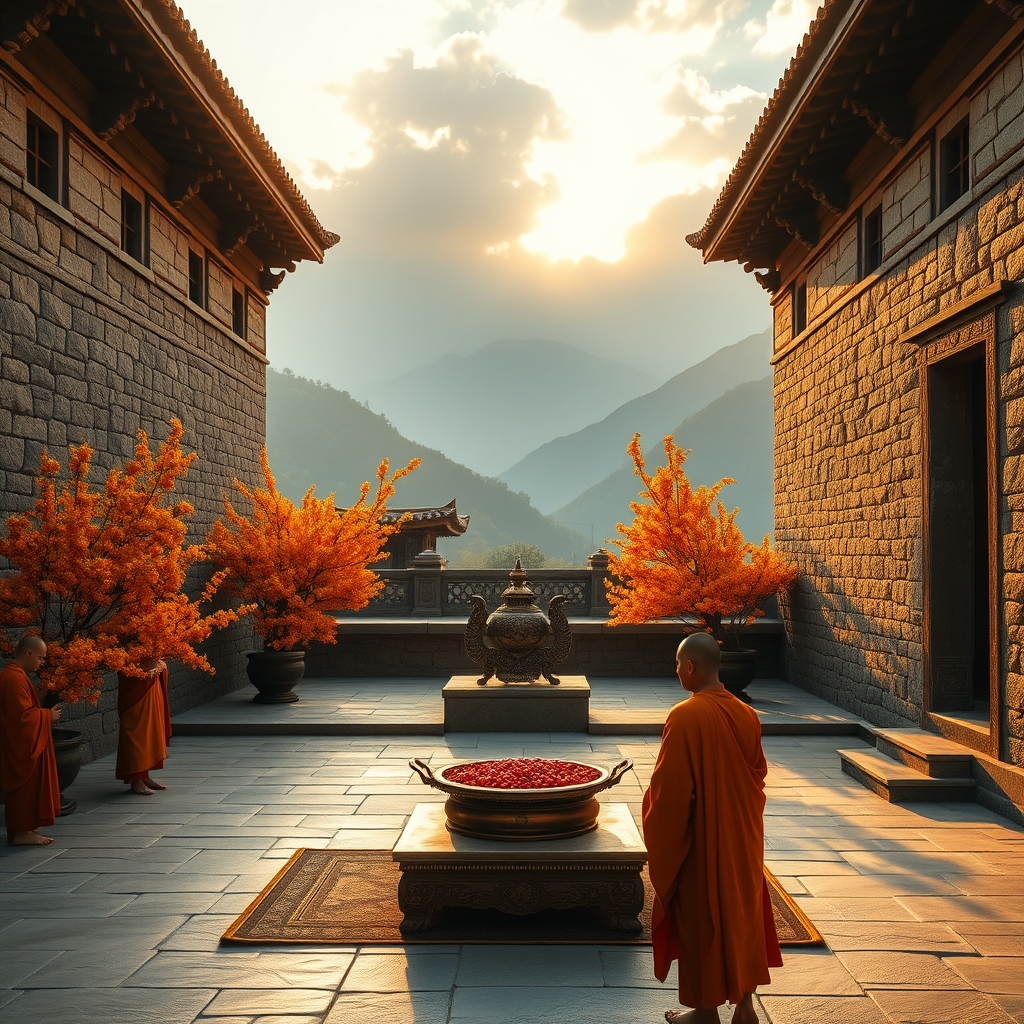
In early Tibetan Buddhism, monks placed harvested berries on altars, symbolising purity of the dharma body and blessings for all beings.
Modern Revival
Major monasteries like Ganden and Sera hold annual spring harvest ceremonies, turning the berries into sea‑buckthorn sweets for lay followers.
Sea buckthorn (Hippophae rhamnoides) originates on the arid slopes of the Qinghai‑Tibet Plateau and the North Asian steppe, tolerating cold and drought, with evergreen foliage and orange‑yellow thorny berries. Because it thrives at high altitude, Tibetan monks have long harvested it as offering fruit, placing it on altar tables and in medicinal kitchens, symbolising a pure dharma body and blessings for all beings. Today, monasteries such as Ganden and Sera still hold spring harvest rituals, where monks crush the berries by hand, blend with butter and yak cream, and make “sea‑buckthorn sweets” for laypeople—both an offering and a therapeutic dish.
II. Nourishing Body & Mind – Nutrition Meets Buddhist Practice
Sea buckthorn berries are packed with vitamin C, E, beta‑carotene and unique flavonoid antioxidants; 100 g of fresh pulp supplies more than three times the daily vitamin C requirement. Contemporary medical studies show regular consumption can lower blood lipids, reduce inflammation, and aid skin repair. In Buddhism, the practice of “protecting body and mind, flowing with nature” aligns with using natural foods to keep the body pure. Monks often stir a small spoonful of sea‑buckthorn paste into butter tea before meditation, providing gentle alertness without disturbing concentration—embodying the principle “nourish the dharma with the dharma, nourish the body with the body.”
To guard body and mind, first nourish the roots with nature's flavor.
III. Practical Guide for Urban Practitioners – Consumption, Wearing, and Scam Prevention
Frequently Asked Questions
How should I consume sea buckthorn daily and what amount is appropriate?
For adults, 30 g of fresh berries or juice (about half a cup) per day is sufficient; if using dried fruit or powder, aim for roughly 5 g. Excess can increase stomach acidity, so combine with warm water or butter.
How can I make a protective amulet with sea buckthorn that aligns with Buddhist practice?
Grind dried berries into a fine powder, blend with natural beeswax, and press into small discs. Wear them or place them before your altar. As long as the mind remains mindful and free of greed, the practice aligns with Buddhist protection.
What are the key signs to identify counterfeit sea buckthorn products on the market?
Counterfeits often use synthetic dyes, taste overly sweet, and lack official batch numbers. Authentic products display a natural orange‑yellow hue with a faint reddish sheen, and usually indicate “monastery‑certified” or include a Samakom authentication card number.
Products marketed as “sea‑buckthorn spirit beads” or “longevity gold tablets” are often additive‑filled items lacking monastery or Samakom certification. Before buying, verify batch numbers and authentication card codes on the packaging, and consult trusted monasteries or veteran dealers.
| Criterion | Authentic | Counterfeit |
|---|---|---|
| Color | Even orange‑yellow with a faint red sheen | Dull, artificially dyed |
| Packaging | Shows monastery certification or Samakom card number | No batch code, exaggerated claims |
| Taste | Naturally mildly sour with subtle sweetness | Overly sweet or chemical bitterness |
| Source | Veteran dealer, direct monastery supply, or authorized distributor | Online pop‑up shops, unregistered sources |