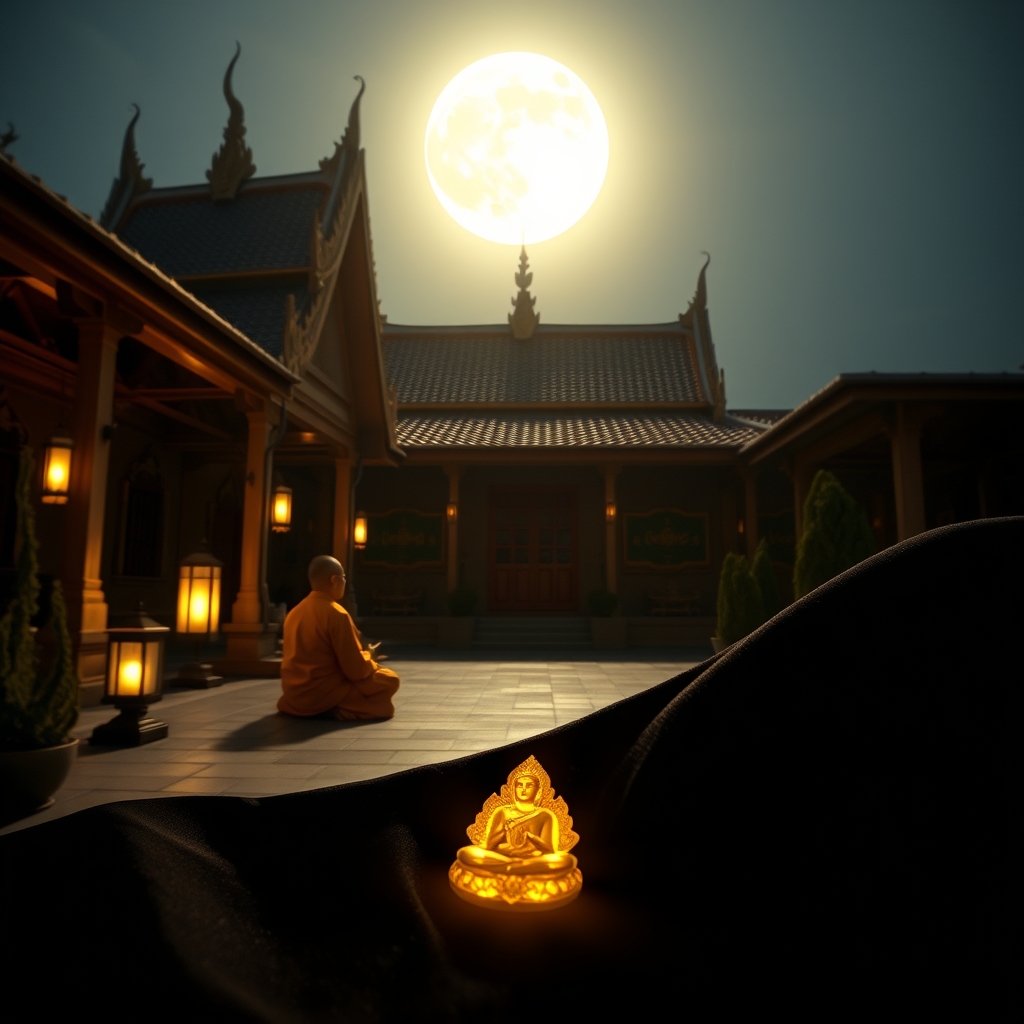
Moon‑Gazing Meditation Amidst Artificial Light
Recently, many netizens reported that an unusually dazzling moon has made it hard to fall asleep. TV host Bai Yansong explained on air that intense light suppresses melatonin production, disrupting the body's circadian rhythm—a direct effect of urban light pollution.
In Southeast Asian tradition, moon‑gazing is a ritual of aligning with nature. Monks often practice “moon‑gazing meditation” on full‑moon nights: they begin with mindful breathing, then calmly observe the full moon, allowing its gentle spectrum to harmonize body and mind. This method is documented in the *Suddhāvāsa* treatise and was championed by masters such as Ajahn Chah.
- Maintain mindful breathing while gazing, syncing breath with the moon’s waxing and waning
- Wear a Phra Somdej amulet over the heart and lightly touch it to channel the moon’s gentle energy
- If ambient lighting is intense, light sandalwood incense indoors first to create a dim atmosphere before moon‑gazing
Etiquette and Taboos for Wearing
Although amulets serve as protective talismans, they come with strict wearing protocols. First, place the amulet at the chest or neck, never below the waist, to preserve its upward‑flowing energy. Second, remove it before intimate activities or bathing to prevent impurity from contaminating its spiritual essence. Before each full moon, offer a brief dedication at a temple such as Wat Phra That Doi Suthep, invoking both lunar and Buddhist blessings for peaceful sleep.
- Remove before intimacy or bathing
- Do not place below waist level
- Perform a short offering at a temple before each full moon